



AI:
A Double-Edged Sword
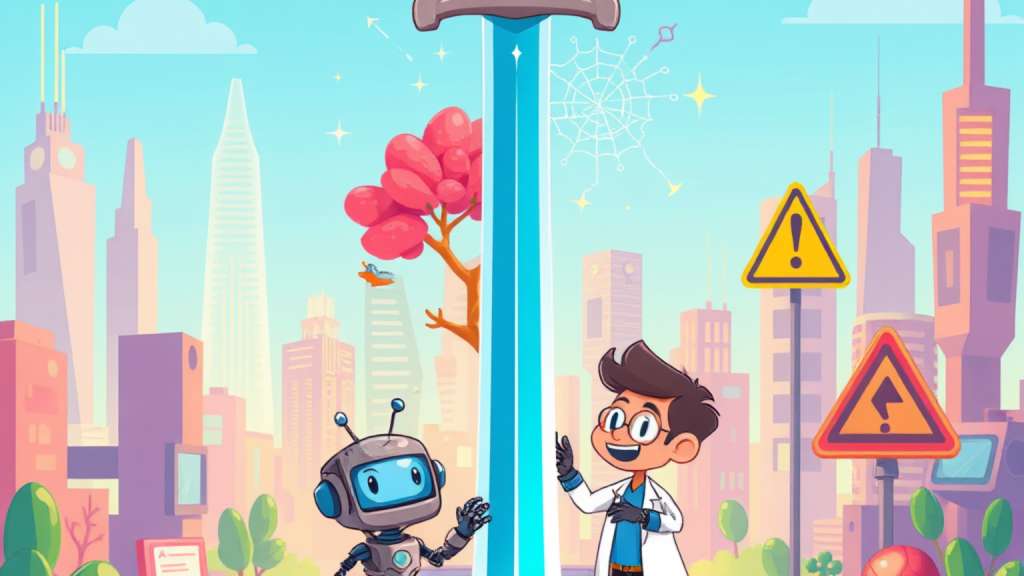
You will learn about the dual nature of Artificial Intelligence (AI), exploring its potential benefits and significant risks. This lesson focuses on developing argumentative writing skills by analyzing a complex topic.
1
Listening
Listen and answer the quiz.
2
Reading + Practice
Read the script, practice vocabulary, and learn useful sentences.
Artificial Intelligence (AI) is one of the most controversial technologies today. While some people believe AI can improve many areas of life, others fear its risks and negative effects. AI allows machines to perform tasks that usually require human intelligence, such as learning and reasoning. As its use continues to grow, it is important to examine whether AI is more beneficial or harmful to society.
On one hand, AI's potential benefits are staggering. Imagine AI revolutionizing healthcare, diagnosing diseases accurately, or developing personalized treatments. Think about AI optimizing energy grids, reducing waste, and combating climate change. In education, AI could offer tailored learning experiences, adapting to each student's pace, making knowledge more accessible. It can automate tedious tasks, freeing up humans for creative endeavors. AI tools already assist us, from suggesting songs to helping navigate information.
However, we cannot ignore the considerable challenges AI presents. One immediate concern is job displacement. As AI becomes more capable, many human jobs could be automated, leading to unemployment if we don't prepare. This necessitates a conversation about reskilling the workforce. Furthermore, AI development raises questions about privacy and data security. AI systems need vast data, and how this data is collected and protected is critical. There's also the risk of bias. If training data reflects societal biases, AI can perpetuate inequalities. We've seen AI algorithms show discriminatory tendencies in hiring or loan applications.
Another concern is misuse. Autonomous weapons systems raise terrifying prospects for warfare. Concentrated AI power in a few hands could lead to an imbalance of influence. We must also consider long-term risks, like superintelligent AI not aligning with human values.
Therefore, as we integrate AI, we must do so thoughtfully and responsibly. This requires robust ethical guidelines, transparent development, and ongoing public discourse. We need collaboration between technologists, policymakers, ethicists, and the public to ensure AI serves humanity, maximizing benefits and mitigating risks. The future with AI is not predetermined; we are building it, and we must ensure it's equitable, safe, and beneficial for all.
2b
Vocabulary Match
Tap a word, then tap its definition.
Words
Definitions
2c
Useful Sentences
Quick sentences you can use in real life.
Discussing the impact of technology
- AI is rapidly reshaping our world.
- The potential benefits of AI are truly staggering.
- We cannot ignore the considerable challenges AI presents.
- It's imperative that we do so thoughtfully and responsibly.
Expressing concerns and risks
- One of the most immediate concerns is job displacement.
- This necessitates a serious conversation about reskilling.
- There's also the risk of bias.
- We must also consider the potential for misuse.
Proposing solutions and future actions
- This requires robust ethical guidelines.
- We need to foster collaboration between technologists and policymakers.
- We must ensure that AI serves humanity's best interests.
- The future with AI is not predetermined; it is something we are actively building.